
 Por Pablo Arranz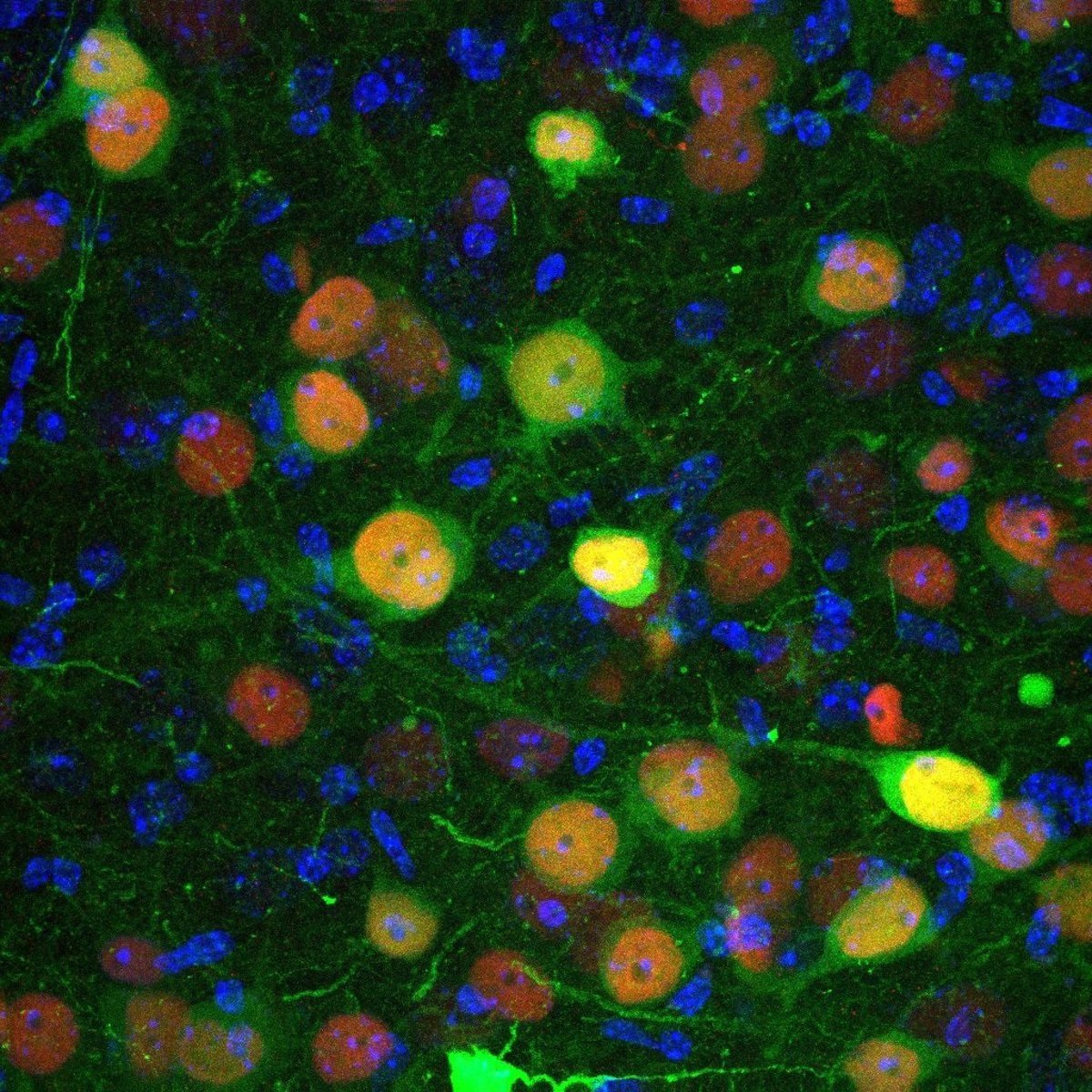
A study led by the Institute of Neuroscience (IN), a joint center of the Higher Council for Scientific Research (CSIC) and the Miguel Hernández University of Elche (UMH), has discovered that a specific group of neurons in the amygdala, a region of the brain that regulates emotions, plays a «key» role in the development of disorders such as anxiety, depression, and changes in social behavior.
This work, published in the journal ‘iScience’, has shown that «restoring the balance of neuronal excitability in a specific area of the amygdala is enough to reverse these behaviors in mice,» as reported by the institution in a statement.
The CSIC research professor leading the Synaptic Physiology Laboratory at the IN, Juan Lerma, has stated that the team knew that the amygdala is involved in anxiety and fear, but now «a specific group of neurons has been identified whose unbalanced activity is sufficient to generate pathological behaviors.»
In this study, researchers worked with genetically modified mice to overexpress a brain receptor called GluK4, which is activated by glutamate, a «key» chemical messenger in the brain. This modification «increases the strength with which neurons communicate and replicates the gene duplication observed in cases of autism.»
These rodents, designed by the same laboratory in 2015, exhibited anxiety and social isolation behaviors «very similar» to those observed in individuals with disorders such as autism or schizophrenia.
Additionally, through genetic engineering techniques and the use of modified viruses, researchers «normalized» gene expression exclusively in the neurons of a specific region of the amygdala involved in anxiety and emotion, restoring communication with another group of inhibitory neurons in another area of the amygdala that act as «brakes to help control anxiety.»
The study’s lead author, Álvaro García, has noted that «this simple adjustment was enough to reverse behaviors related to anxiety and social deficits, which is amazing.»
Furthermore, these animals were evaluated using electrophysiological techniques and behavioral tests that assess anxiety, depression, and social relationships in rodents, based on their preference for exploring open spaces or their interest in unfamiliar mice.
UNMODIFIED MICE
On the other hand, researchers applied the same procedure to unmodified mice that exhibited an intrinsic state of anxiety, with similar effectiveness.
Lerma emphasized that «this validates the results and provides confidence that the identified mechanism is not exclusive to a specific genetic model, but may represent a general principle of how these emotions are regulated in the brain.»
However, the CSIC has stated that after the experiments, «some behavioral deficits were not resolved,» such as object recognition memory, suggesting that other areas of the brain, like the hippocampus, involved in these types of disorders, were not corrected.
In this context, the study opens the door to new therapeutic options, and according to the researcher, «targeting these specific neuronal circuits could become an effective and more localized strategy for treating affective disorders.»
FUNDING
This work was funded by the State Research Agency (AEI) of the Ministry of Science, Innovation and Universities, the Severo Ochoa Program for Centers of Excellence at the CSIC-UMH Institute of Neuroscience, the European Regional Development Fund (ERDF), and the Valencian Community through the Prometeo and Ciprom programs.