
 Por Pablo Arranz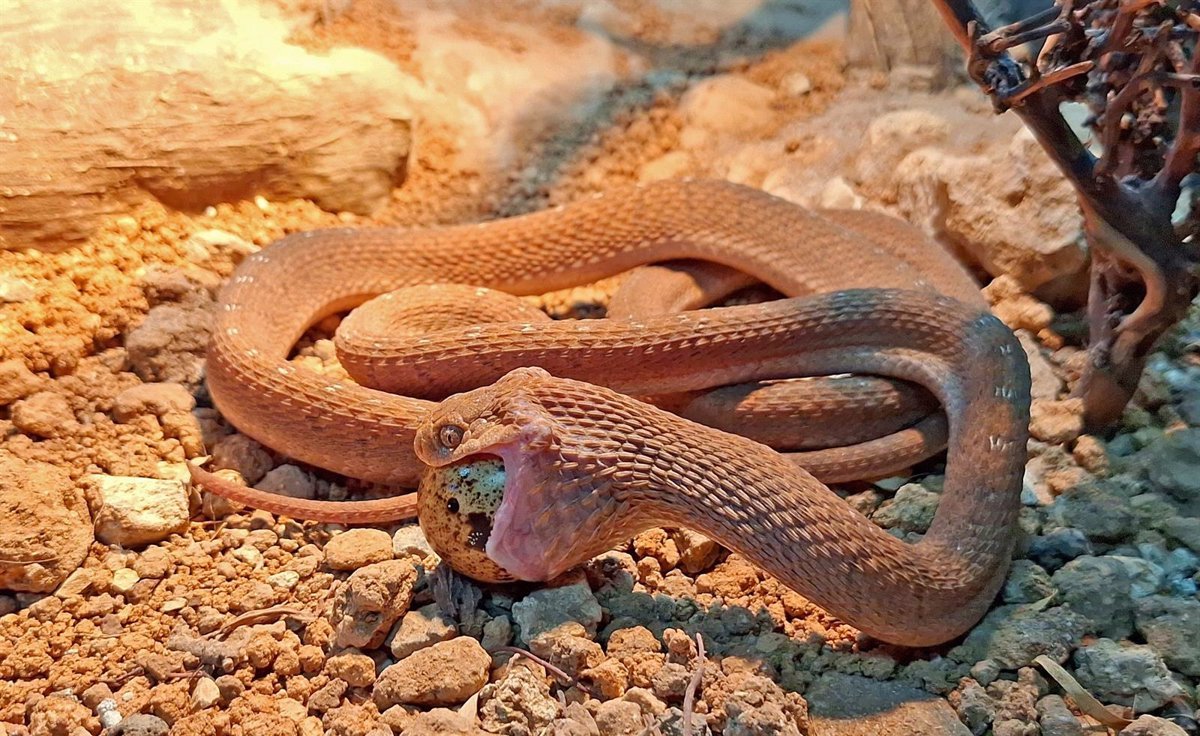
A specimen of the snake ‘Dasypeltis medici’, commonly known as the egg eater, is now on display at the reptile exhibition at Terra Natura in Benidorm (Alicante) after undergoing a veterinary recovery process that lasted over two months, following its discovery in the center of Murcia.
The animal arrived at the park in early January «in critical condition, showing signs of dehydration and being underweight» and has been treated since then by the park’s team of veterinarians and herpetology experts until it reached «an optimal state of health.»
A citizen found the snake in the center of the Murcian capital and alerted the Nature Protection Service (Seprona). After being picked up by the agents, it was transferred to the facilities of Terra Natura in Murcia, where it was confirmed to be a non-native exotic species.
Due to the specific care requirements, it was decided to transfer it to Terra Natura Benidorm, «the only center in the area with a specialized veterinary and herpetology team for the management of exotic reptiles and facilities adapted for its long-term recovery, monitoring, and well-being.»
Since its arrival, it has been kept in a quarantine area where its progress has been monitored, including skin sheds, response to hydration, and its diet, which consists exclusively of eggs. Once stabilized, it was moved to the outdoor area of the volcano, where it can now be seen by the public alongside other species, as explained by Terra Natura in a statement.
FEEDING
The ‘Dasypeltis medici’ is a snake native to the African continent, with diurnal habits and a length close to one meter. It feeds on eggs of small birds that it locates by climbing to their nests. At Terra Natura Benidorm, it is offered a controlled diet of quail eggs, which it swallows whole. Once inside its body, it breaks the shell by contractions of its pharynx, extracts the content, and then regurgitates the remaining shell.
«Despite its appearance, it is one of the most harmless snakes. It is not venomous and does not have functional fangs. However, it has highly developed defense mechanisms. When threatened, it can emit a loud sound by rubbing its scales, a technique known as stridulation, reminiscent of the hiss of a dangerous snake. Additionally, it can open its mouth as a warning signal without actually attacking, as a deterrent strategy against predators,» detailed the nature and animal park.
They added: «The inclusion of this specimen in the park’s faunal plan not only allows the public to expand their knowledge of unique and lesser-known species, but also reinforces Terra Natura Benidorm’s commitment to the conservation of biodiversity and scientific dissemination.»
In this regard, they explained that they actively collaborate with Seprona in the reception and care of rescued animals, many of which come from illegal trafficking, seizures, or abandonments.
«Thanks to their experience and their specialized team in the medicine and management of wild fauna, the park serves as a shelter for species that require specific veterinary care and a controlled environment for their recovery,» they concluded.